Saturday, 21 October 2023

Old h@g

 
Work in progress from currently untitled series

I have never thought about my age at all as a defining feature, not when I was 10, not when I was 25, not when I was 40. Personally I feel this has been a gift. I have never been someone who lives by labels and I still don't, perhaps this makes me blind to a lot of the pressures some people feel about hitting life's landmarks.

However, I've noticed that society wants me to feel differently especially now that I'm IN my forties. Maybe I was blinkered to the implied messages before, but this year they have really been making themselves known. In advertising, the media, casual chat, and social media these messages want me to feel bad about my age, but I don't.

What I do feel is uncomfortable and angry at the path I'm expected to follow. Know your place, know your limits, know that your worth is decreasing. Try and do something about it, but don't try too hard, if you do then that's just pathetic. These messages are so hurtful to women in general and to older women they are plain mean and marginalising.

Women already have to dodge and navigate the myriad of social expectations and restrictions put on us from a patriarchal society (just ask America Ferrera's character in the Barbie Movie). But as we get older we're then expected to conform to a whole other set of rules and ask just where we fit into the narrative this society allows us.

As everyone gets older I feel that this is a rhetoric we have to try and escape and not fall prey to. After all, we are still the same people inside. In other cultures female learned wisdom and experience are celebrated, but here in the West we are taught that our value is only skin deep. I certainly feel a kickback against it and I have been making new work describing my feelings about Western society's mental block when it comes to women getting older.

The idea for my work was first sparked by reading the comments section of the online Daily Mail of all places. Now, please don't come for me. I'm not a Daily Mail subscriber and I don't buy into the daily 'rags' as we call the red tops here in England. Actually, I was reading an article about one of my favourite pop icons, Kylie Minogue. This has been HER year, she's made another 'come back' with a hit single going viral earning her a new wave of fans, a number one selling album and she's about to play a residency in Vegas. Not bad if you ask me, and as a fan I love to read all about it and get a feeling for what others are saying.

While the article was what you'd expect from the Daily Mail; mentioning her age in the first paragraph, her figure hugging clothes, and the usual photos of Kylie at different events (It also got a backwards compliment in saying that she put on an 'age defying display' in her music video for Padam Padam), the comments section was a wasteland of derogatory remarks and ageist tropes.

'Old h@g has sold her soul' 

She looks 'completely ridiculous'. 

'She’s starting to look desperate to remain newsworthy'

'She's looking rough. And a little scary'

'She looks deranged'

and has 'too much vanity'.

I was put mind of Norma Desmond rather than Kylie Minogue. Then I realised, society has been spoon fed these narratives about older women for years. Decades. Centuries even.

From the wicked witch of fairy tales to Hagsploitation films, from the gorgons of mythology straight to the Daily Mail, the monstrous older woman is a character we have all grown up with and never questioned. We churn out the same tropes over and over immediately boxing in any woman we feel threatened by for her success, sexiness or talent when she is no longer deemed young enough to have any of these things. Both men and women repeat the narrative knowingly and unknowingly perpetuating the story.

While there was hardly any negative response to 81 year old Paul McCartney announcing that he will tour Australia this year, 65 year old Madonna received a barrage of insults when she announced her world tour. Many of these aimed at her looks and abilities. 

'This is like something out of my darkest nightmare! Someone in her inner circle needs to sit her down and level with her...time to pass the torch!'

'Granny's off her rocker. SMH!'

'Acts like a teen,looks like a corpse'

'Disgusting old hag'

Kelly Doyle a professor of horror movies at Kwantlen Polytechnic University explains this backlash best by stating,

“Some of the historical precedents (around the monstrous woman) are about establishing power dynamics, and any time women are seen as a threat to the patriarchal order, there needs to be a way to other them, to demonize them, to make them afraid to do those things,”

My current work takes these monstrous archetypes and uses them as a commentary on the Western world's narrow view, transforming the well known female figurehead of Barbie (a paradox of eternal youth with 65 years of existence) into ultimate older female tropes, Medusa, The Harpies, Evil Sorceresses and more. It's all a work in progress but I feel it is a cathartic experience. With this work I feel I am taking the narrative given and projecting it back. For me it is about feelings of otherness and emotional responses. Medusa with her snakes for hair is every woman made to feel bad about going grey, The Harpies are the women with something to say told that they are actually grotesque and unfeminine. The list goes on, and as I research I want to unpick these long held ideas of the monstrous woman, the mad sad hag and root out the meanings and reasons behind them.

Work in progress from currently untitled series
 
My next few posts here will be doing just that, so join me as this work unravels and we explore the stories behind the monsters.

Saturday, 9 September 2023

Marilyn Monroe's home temporarily saved, the fight goes on...

After a tumultuous three days of campaigning Council Woman Traci Park of Los Angeles has passed a temporary stay of demolition of Marilyn Monroe's Brentwood home.


The Councilwoman spoke in a recent press conference that she had been contacted by 'hundreds and hundreds of people from around the world' sharing their concern for the safety of the property once owned and lived in by Marilyn. This helped to convince council members of the historic and cultural relevance of the site and she and her team have been working around the clock to halt the demolition.

The next stage in the preservation of the home is designating it as a Historic and Cultural Monument, in order to halt any future plans to destroy it.

If successful, this could set a precedent for the preservation of other historic landmarks in L.A which are currently unprotected from potential pull down. The area has seen many of its legendary sites already lost, including Schwabs Pharmacy and the homes of other stars from the golden age of Hollywood including Jayne Mansfield's iconic Pink Palace, and the mansion used in the classic film Sunset Boulevard.

It is unbelievable that a place so embedded in the culture that funds and fuels it values its historic landmarks so little.

The huge outpouring of emotional response to the Marilyn Monroe house confirms how precious her legacy is but also the lack of duty of care that should have been there in the first place. I can't help but think that even Marilyn, the most recognisable star of the 20th Century with a thriving fan base, couldn't be considered as legitimate enough for cultural relevance. It mirrors the fact that women's history in general is never taken as seriously or treated with the same reverence as their male counterparts. Perhaps that is why general history is so dominated with men, while women have been creating, supporting, inspiring and existing alongside them since people began preserving stories.

This is certainly a wonderful and uplifting breakthrough in the story of Marilyn's legacy and I am grateful to all the other fans who reached out and to Councilwoman Traci Parks for her efforts. The fight isn't over yet, but as we continue along, let's hold a good thought for Marilyn and champion all the women making history every day.


Thursday, 7 September 2023

Petition to stop the demolition of Marilyn Monroe's house

***UPDATE*** since posting this last night, the permit to go ahead with demolition was granted. While this is a devastating piece of news, members across the Marilyn community are doing all they can to prevent the pull down from happening. People with connections and reach are working from all angles and there's still more we can collectively do. 

Council Woman Traci Park of California deals with the district Marilyn's home falls under. She can be reached by email at councilmember.park@lacity.org for people to oppose the permit. If you choose to email her please be respectful and kind as members of Traci's team have already made it clear that they are doing everything they can to save this home.

The petition is also still valid. The link and my original post can be found below:

-

After the dress debacle and the travesty of 'Blonde', there has now been a request for planning permission to demolish Marilyn's house by its current owner in order to build a modern much bigger construction.

Her material and cultural legacy has really taking a beating in the past year and now this could possibly wipe out a location that means so much to so many fans of both Marilyn and pop culture history. Its amazing that we still have this link to her and it never passed my mind that her home at 12305 Fifth Helena Drive could be destroyed. I mean, she's Marilyn Monroe, she's an icon!

This is the first house she ever owned and marked a turning point in her life where she was finding growth personally and professionally. It is also the place where she died. 

Arguably with the cult around her death being equally as lucrative as the celebration of her life and career, surely this house counts for something? 

There has been a petition set up to try and stop the demolition and turn the home into a Monroe museum akin to Graceland.

Personally, I have mixed feelings about it becoming a museum because of the death aspect. I think it would have to be handled with extreme sensitivity and as a museum focus on her life and successes rather than become a morbid pilgrimage for the general public.  That said, if the petition can do anything to stop the destruction of a cultural landmark and a place that Marilyn was so excited to own and make hers, then I'm all for sharing it.

Please consider adding your name to save a piece of history

https://www.change.org/p/stop-demolition-marilyn-monroe-s-house

Saturday, 8 October 2022

An Embarrasment Of Raptures

    
Earlier this year I went on a trip to Rome and if I could sum up the city in one word, it would be 'theatre'. The whole place is alive with grand gestures created in stone, paint and gold. Stories upon stories crowd the streets told in the layered histories of buidlings and people. Even the natural landscape seems like a painted backdrop missing only the red velvet curtains to frame it..

Nowhere is the drama more evident than the many churches that sit in every quarter and offer a cool respite from the heat of the Italian sun.

It was on our first night there that I realised that one of my all time favourite art works was housed in a church only 18 minutes walk from our hotel. I went to bed that eveing not quite believing that in a few hours I'd get to see it.

The Santa Maria Della Vittoria is rather sedate from the outside, but walking through the doors and not knowing what to expect was a fantastic experience. It was like entering a huge treasure box filled with riches.


The church is a place of illusion where, long before Hogwarts took up the idea, the ceiling  billows with clouds like a building directly open to the heavens with angels spilling out to interact with the church below.

There are side chapels with ornate sculptures and canvases, yet, The Ecstacy of St Teresa by Gian Lorenzo Bernini is the piece that stands out. It sits upon it's own stage flanked by a stone audience of nobles and church officials who crane forward to witness the miracle before them.

...A young beautiful woman is supported by a cloud, she looks weightless as her nun's robes ripple about her body. A Cupid like angel, stands over her smiling. He holds a golden arrow which is aimed to once more plunge deep into her heart. In his other hand he lifts her gown uncovering his target. The woman is in a state of rapture, her fingers curl, her eyes roll back, her mouth is open and gasping. One foot hangs languid as she loses herself entirely.

I love this sculpture for it's sensuality and how Bernini took an already incredible story and ranked it up with sex and drama. No wonder those old men in their theatre boxes are staring and gossiping.

Saint Teresa of Avila was a real person who had lived in Spain almost a century before Bernini. She was a noble woman called to convent life and known for her 'embarassment of raptures' which she helpfully chronicled throughout her lifetime. The 'Ecstasy' as showcased in the scupture was recorded around the time she would have been 44 years old, she spoke of her encounter with an angel,

'I saw in his hand a long spear of gold, and at the point there seemed to be a little fire. He appeared to me to be thrusting it at times into my heart, and to pierce my very entrails; when he drew it out, he seemed to draw them out also, and to leave me all on fire with a great love of God. The pain was so great, that it made me moan; and yet so surpassing was the sweetness of this excessive pain, that I could not wish to be rid of it ..'

Bernini took the emotional, sensual and supernatural aspects of this experience and highlighted them instead of the pious canon people had been used to up that point. You only have to look at earlier representations of St Teresa to see the very staid way her 'rapture' had been conveyed.


By making the saint a young and beautiful woman and focusing on the lifting of her habit, the thrusting of the arrow, the glazing of her eyes and the curling of her toes, Bernini brought sex into the church and caused a sensation.


When it was unveiled in 1652, the marble brought controvery due to it's sensuality. Saints, of all people, just weren't portrayed with such capacity for pleasure or sexual allure. Yet it couldn't be ignored that this work was a masterpiece channeling a sense of theatre and drama that put passion, of both a religious and carnal nature, centre stage. Connecting with God had never been so hot!

Despite the religious scandal and criticism from Bernini's peers, the work was widely popular and the church took note. Perhaps a more fleshy and carnal take on the divine wasn't so bad when it captured so many people's attention. This work led to other commissions including the equally potent, yet less powerful, Ecstasy of the Blessed Ludovica Albertoni which was completed some 20 years after Teresa.

Yet St Teresa stands out from anything that came later, and perhaps that is because it isn't just a sculpture, but an entire stage production incorporating painting, framing, lighting and stage effects.

A hidden yellow glass window above the 'hovering' saint channels holy light down onto her via gilded bronze rays that replicate energy beaming down from the heavens. This in turn creates a stark lighting that captures the undulatrung movement of many the folds in her habit and the transfixed expression on her face.

As a complete piece the art work is a masterpiece of Baroque, bursting with ornament. decoration and movement. To stand before it really is like witnessing a performance where every element is finely tuned to convey the drama of the story.

 
For me, seeing St Teresa in reality was almost overwhelming. I gasped. 'There she is!', when I spotted her and then stood gazing up at the sculpture trying to take in every ounce of detail for what seemed an age. I never ever thought that I would get the chance to see this piece of art with my own eyes and as I realised that I was actually there looking up at her, tears began to run down my face. The German tour group also there to see her must have thought I was having a religious experience, which in a way, I suppose I was.
 
Never underestimate the power of art.
 
I would go back to Italy in a heartbeat and I hope one day to do so. For now the thrill of the theatrics and the beauty of it's art is still running through me.

Saturday, 1 October 2022

Blonde, a shameful mess to be avoided

Its fair to say that I didn't come to this film with an open mind, but even with the warnings in place I still gave it a go because as a Marilyn fan since childhood, a new movie about her is still an exciting prospect

However this isn't a film about Marilyn Monroe. I don’t know who this sacrificial lamb is but she meandered from scene to scene in a daze of tears and trauma as almost everyone she met either abused, raped or beat her. No one offered even a hint of humanity to this woman who seemed to have absolutely no agency whatsoever

This film pisses on the #metoo movement. This film is trash. Andrew Dominck should be ashamed. A woman director would never have put its female lead through so much lingering voyeuristic porn and cruelty

I found myself actually skipping whole scenes because seeing little wide eyed Norma Jeane get screwed over again and again frankly got boring as hell! 

It's important to know that BLONDE IS NOT A BIOPIC! It is a fictionalised retelling of Marilyn's story using only minimum fact as a base to build lurid details upon.

Marilyn Monroe's life was anything but easy, with well documented substance abuse brought on from childhood trauma and an undiagnosed mental condition. But as her husband the playwright Arthur Miller once said, "the struggle was valiant, she was a very courageous human being"

SHE WAS NOT A VICTIM. Marilyn had spark! She took on the patriarchal studio system to create her own production company. She stood up for civil rights and stood against McCarthyism. She refused to be typecast into the one dimensional role she was given and studied hard to hone her craft and she did all this in the era of the 1950's where a woman's voice counted for little

Using Marilyn's legacy to make this drivel is a slap in the face to everything she achieved and worked through to get to where she did. She came from nothing and literally became a Hollywood legend!

In all the decades since Marilyn struggled to be taken seriously and be seen as more than just tits and ass, this film underlines that things haven't changed as much as we like to think. She put it best when she said Hollywood was, "a place where they’ll pay you a thousand dollars for a kiss and fifty cents for your soul.”

Don't bother watching this film

Monday, 23 May 2022

Who is the mystery woman on The Tattooed Lady?

Photo by Simon Liddiard

Yesterday was the seventh birthday of my art work The Tattooed Lady! She made her debut on the 22nd May 2015 as part of the launch exhibition at HOME Manchester and since then has appeared at other art events dispensing temporary tattoos (you can find out more about her on this blog). As a birthday treat I thought I'd write about the history of the mysterious woman whose photo I used as inspiration for the painted section of my penny arcade machine and share her dark and forgotten story. She was an enigma to me until recently, but her story is unforgettable.

So get comfortable, take a deep breath, and read on as we explore the tumultuous history of a tragic showgirl star...

A tale of love and regret:

As one of the stars at the Ziegfeld Follies, Imogene was riding a wave of notoriety and fame. She had become one of it's most popular showgirls, sparkling and shimmying every night in her Erte costume and her effervescent personality could be felt far beyond the stage.
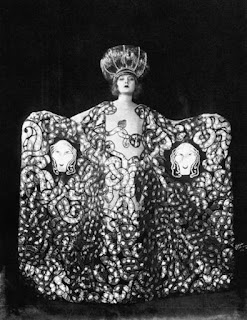
 

The columnist Mark Hellinger had once quipped, "Only two people in America would bring every reporter in New York to the docks to see them off. One is the President. The other is Imogene "Bubbles" Wilson." Frequently spotted around town in the best restaurants and night clubs, she had earned a reputation as a party girl and how the press adored her! 'Bubbles rhymes with troubles' yelled the headlines!

It was 1922, and Imogene was a jazz baby living as a fashionable and daring young thing. Yet she had arrived in New York under very different circumstances just a few years earlier. 

A small and thin child with few belongings, Imogene had made the long journey from Kentucky to the Big Apple to live with her older sister Mabel. She had chosen to leave behind the foster home that her father had put her in after her mother had died, and in doing so had changed the course of her life. 

Aren't you going to dance? by Arthur William Brown

By 13 Imogene was already a beautiful girl and began to work as a model for magazine illustrator Arthur William Brown. Word must have got around about her good looks as Broadway producer Florenz Ziegfeld Jr soon came calling and put her in his musical revue. He dubbed her 'Bubbles' due to her irrepressible nature and gave her a featured role in the show catapulting her into stardom.


By 1924 everyone's favourite showgirl was to begin a highly publicised affair with fellow Vaudeville act Frank Tinney. A popular black face performer, Frank was successful, older and very married. He must have made quite a glowing impression on the teen but shared a condescending attitude with others stating, “Sure I have a wife, a mortgage and an appendix, but why should I bring these things up and spoil a pleasant evening?”
 
 
Unfortunately for Imogene, Frank was also a heavy drinker and over the length of their relationship she would often turn up for work with bruises where he had hit her. Things reached a head when Frank found her alone in her apartment with a newspaper reporter and assuming the worst beat her so badly that she afterwards attempted suicide.


Later the newspapers reached a frenzy when 'Bubbles' Wilson appeared in court to press charges against Frank Tinney. She showed her bruised belly where he had kicked her and claimed he practiced his boxing on her lithe frame. Even Imogen's maid testified that Frank was a heavy drinker and was often violent. She herself claimed he had 'chastised' her and caused injury.

Despite all this, a grand jury refused to indict Tinney on assault charges and he went on to tell the press that Imogene had fabricated the whole thing as a publicity stunt. Already known as a free spirit and party girl, it wasn't a far stretch for the 1920's general public to also paint her as a deviant and liar. 

 
Ziegfeld was not impressed by Imogene's 'cheap' behaviour and fired her, feeling that her reputation would be bad for the show and the morale of his performers. This was in spite of the fact that his own personal doctor had inspected her injuries himself and declared “this girl looks as though she had been struck by an automobile.”
 
Even with her bruises and losses, Imogene was still infactuated with Tinney and in a move to get his attention that only cemented her delinquent image, she threw a 'suicide party' and swallowed heaps of sugar pills in front of her guests. After an ambulance was called and news of this hit the papers, Tinney beat her once more.
 
 
It seemed nothing could deter Imogene from her addiction to this toxic relationship. After Tinney announced he was leaving for an stint on the English vaudeville circuit the two reconciled and she boarded the ship to see him off before his departure. She told the waiting reporters that Tinney was, 'the only thing in my life. I know it, you know it, so why should I beat around the bush?'. She cried as the ship sailed away.
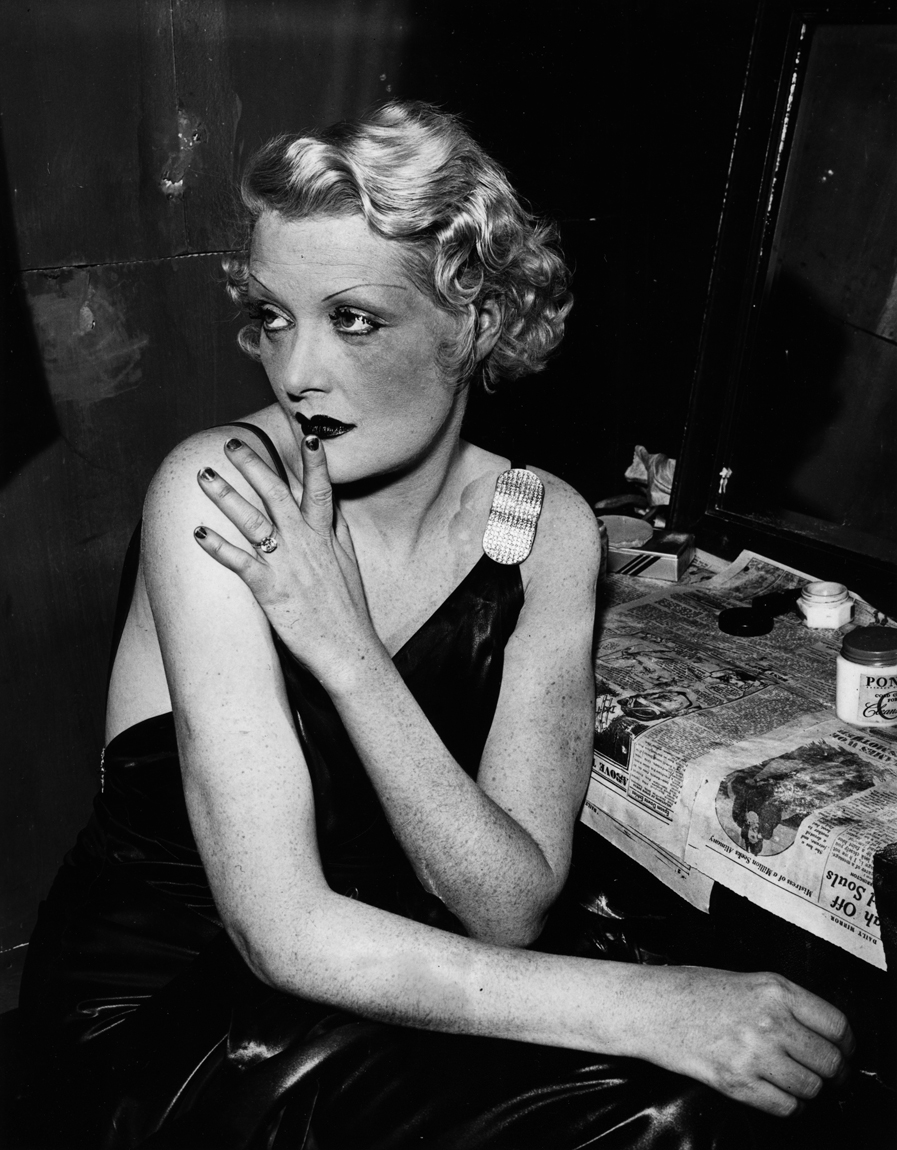
The next month she too was sailing, heading to Europe to appear in a French revue. It was not long however until she hopped across the Channel back to Tinney. He had begun to drink again and shortly after their reunion Imogene was once more black and blue. In early 1925 they finally split up for good when Imogene was tempted away to star in German films. When later asked about her affair with Frank she claimed she had only been 14 when it started, and it had been, 'a nonsensical mixture of fights and laughs, and half and half'.
 

On a side note; When Frank Tinney returned to New York his reputation had been tainted and his reception was less than glowing. Many of his friends abandoned him, his career floundered and his wife having divorced him wanted nothing more to do with him. Soon ill health and debts overtook his career and he faded from the limelight.
 

Back in Germany, it was a different tale. Imogene was now known as 'Imogene Robertson', and making a genuine go of things. For the next two years she starred in several films and received good revues earning her around $1500 a week. This led producers in Hollywood to take interest and offer her American projects, but she turned them all down. In Europe, while her life was still chaotic, she was at least free of her dubious past.
 
 
However, when Joseph Schenck of United Artists offered her a lucrative contract to return to the USA and work for him, she finally relented. The press took a huge delight in retelling her scandalous history prompting some women's groups to protest against her making films in America, while well known prude William H Hayes also expressed his dislike of her return. As a way to distance 'Bubbles' links with her past United Artists relaunched her career under a new screen name, Mary Nolan.

Under United Artists Mary starred in a just two films before moving to Universal Pictures. Here she played opposite such Hollywood elite as Lon Chaney and Lionel Barrymore and made such an impression on movie goers that she became a sought after starlet making $3000 a week. By 1929 she was once more riding high and had earned a lead role in the drama 'Shanghai Lady' playing a former prostitute and opium addict embarking on a respectable love affair only for her sordid life to catch up with her.
 
 
In reality it seems Mary likewise couldn't contain her still in-suppressible nature and she fell in love once more. This time the object of her affection was none other than legendary 'Fixer' and all round shady character, the executive and producer Eddie Mannix. If his status as the man who covered up Hollywood's crimes and disgraces by nefarious means wasn't enough, he was also, like Tinney before him, very married.
 

Mannix used his connections to push Mary's career and got her work with MGM on the film 'Desert Nights', while rumours flew that he also forced the star to undergo an abortion. Not long afterwards he abruptly ended their relationship. 
 
Mary, never one to handle a break up well, threatened to tell his wife about their affair which sent Mannix into a rage beating her into unconsciousness and hospitalising her for six months where she underwent 15 operations to repair the damage he had inflicted to her abdomen. It was during her recovery that Mary was prescribed morphine for pain relief and it was rumoured she became addicted to the drug. The next year while being treated for severe sunburn, nurses gossiped of finding needle marks up her arms.
 
 
In 1930 while making the movie 'What Men Want', Mary got into an argument with the film's director when she complained that she was the only cast member not to receive a close up. She was first banned from the set then fired altogether. After threatening to file a lawsuit against them, Universal bought her contract and possibly encouraged the hearsay about her temperamental behaviour and alleged drug use around Hollywood cutting her chances of ever getting work with another major studio.
 
 
From here on Mary worked on bit parts and supporting roles in low budget films for Poverty Row studios and in another attempt at love she married a stock broker named Wallace T McCreary. One week before their nuptials he lost $3 million on bad investments. With his remaining money the couple opened a dress shop, 'The Mary Nolan Gown and Hat Shop' but it went out of business within months. The couple were sued by creditors and ex employees seeking their wages. When giving a statement on proceedings, Mary said, 'They hound me because they remember a naughty Imogene Wilson. Don't they know that the side of me... vanished?' The next year Mary filed for bankruptcy and divorced McCreary, she was 24 years old.

Over time Mary's name was seen in the papers again when in 1935 she made an ill judged decision to file a lawsuit against her former lover Eddie Mannix for the physical abuse that had contributed to her career's downfall. She asked for $500,000 in damages. Predictably Mannix, an old hand at manipulating events to turn his way, stated that the claims were made in an attempt to resurrect her flagging film work. He further went on to discredit her and ruin her reputation by leaking negative stories about her sex life and many abortions, and he even sent a private eye to her home to threaten her with arrest for possessing morphine.
 

Now, shunned by Hollywood and making a shaky living back on the vaudeville circuit, Mary's life was punctuated by an arrest for an unpaid dress bill and several stays in hospitals for an attempted overdose and  'severe nervous strain'. Eventually upon her release she changed her name to Mary Wilson and got a job managing a bungalow court.
 
In 1948, Mary decided to write her memoirs  titled, 'Yesterday's Girl', with the help of the writer John Preston, but they remained unfinished. Suffering from malnutrition and residing in a small Hollywood apartment she was found dead at 42 from an overdose, the cause of which was never decided.
 
 
In her short life Mary blazed a trail across the entertainment industry burning brightly and very fast. It seemed that even with her talent energy and beauty, she was drawn to terrible relationships with awful men which took hold of her and kept her in a state of self destruction. With little to no support or understanding from the machine that had fed off her fame, she was left as an outsider and remembered as a dream that once was. Despite all this she is known to have said, 'I've had a beautiful life. I've tumbled into the most beautiful life in the world. I'd never change it'.