Showing posts with label Old Hollywood. Show all posts

Saturday, 1 October 2022

Blonde, a shameful mess to be avoided

Its fair to say that I didn't come to this film with an open mind, but even with the warnings in place I still gave it a go because as a Marilyn fan since childhood, a new movie about her is still an exciting prospect

However this isn't a film about Marilyn Monroe. I don’t know who this sacrificial lamb is but she meandered from scene to scene in a daze of tears and trauma as almost everyone she met either abused, raped or beat her. No one offered even a hint of humanity to this woman who seemed to have absolutely no agency whatsoever

This film pisses on the #metoo movement. This film is trash. Andrew Dominck should be ashamed. A woman director would never have put its female lead through so much lingering voyeuristic porn and cruelty

I found myself actually skipping whole scenes because seeing little wide eyed Norma Jeane get screwed over again and again frankly got boring as hell! 

It's important to know that BLONDE IS NOT A BIOPIC! It is a fictionalised retelling of Marilyn's story using only minimum fact as a base to build lurid details upon.

Marilyn Monroe's life was anything but easy, with well documented substance abuse brought on from childhood trauma and an undiagnosed mental condition. But as her husband the playwright Arthur Miller once said, "the struggle was valiant, she was a very courageous human being"

SHE WAS NOT A VICTIM. Marilyn had spark! She took on the patriarchal studio system to create her own production company. She stood up for civil rights and stood against McCarthyism. She refused to be typecast into the one dimensional role she was given and studied hard to hone her craft and she did all this in the era of the 1950's where a woman's voice counted for little

Using Marilyn's legacy to make this drivel is a slap in the face to everything she achieved and worked through to get to where she did. She came from nothing and literally became a Hollywood legend!

In all the decades since Marilyn struggled to be taken seriously and be seen as more than just tits and ass, this film underlines that things haven't changed as much as we like to think. She put it best when she said Hollywood was, "a place where they’ll pay you a thousand dollars for a kiss and fifty cents for your soul.”

Don't bother watching this film

Monday, 23 May 2022

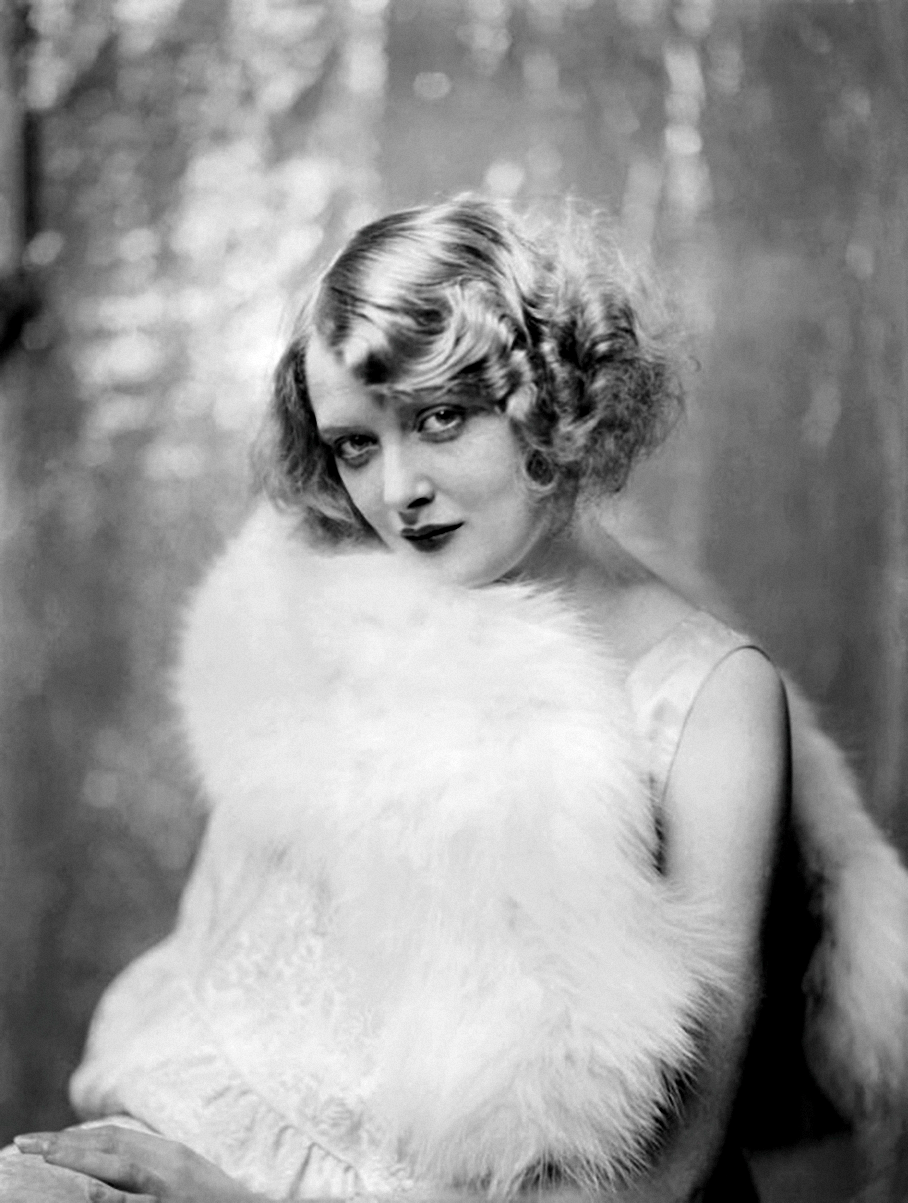
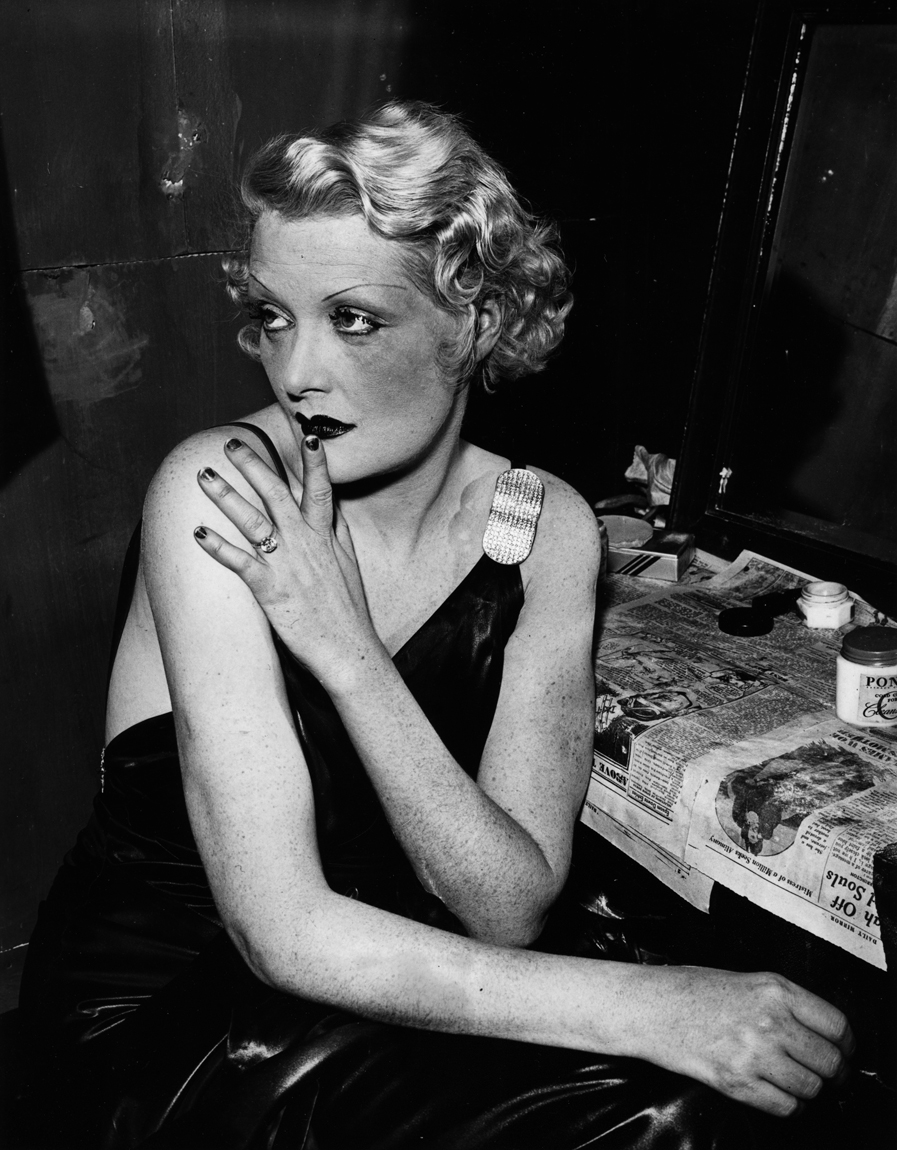
Who is the mystery woman on The Tattooed Lady?

Photo by Simon Liddiard

Yesterday was the seventh birthday of my art work The Tattooed Lady! She made her debut on the 22nd May 2015 as part of the launch exhibition at HOME Manchester and since then has appeared at other art events dispensing temporary tattoos (you can find out more about her on this blog). As a birthday treat I thought I'd write about the history of the mysterious woman whose photo I used as inspiration for the painted section of my penny arcade machine and share her dark and forgotten story. She was an enigma to me until recently, but her story is unforgettable.

So get comfortable, take a deep breath, and read on as we explore the tumultuous history of a tragic showgirl star...

A tale of love and regret:

As one of the stars at the Ziegfeld Follies, Imogene was riding a wave of notoriety and fame. She had become one of it's most popular showgirls, sparkling and shimmying every night in her Erte costume and her effervescent personality could be felt far beyond the stage.
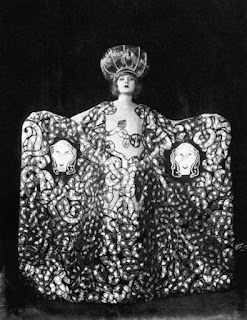
 

The columnist Mark Hellinger had once quipped, "Only two people in America would bring every reporter in New York to the docks to see them off. One is the President. The other is Imogene "Bubbles" Wilson." Frequently spotted around town in the best restaurants and night clubs, she had earned a reputation as a party girl and how the press adored her! 'Bubbles rhymes with troubles' yelled the headlines!

It was 1922, and Imogene was a jazz baby living as a fashionable and daring young thing. Yet she had arrived in New York under very different circumstances just a few years earlier. 

A small and thin child with few belongings, Imogene had made the long journey from Kentucky to the Big Apple to live with her older sister Mabel. She had chosen to leave behind the foster home that her father had put her in after her mother had died, and in doing so had changed the course of her life. 

Aren't you going to dance? by Arthur William Brown

By 13 Imogene was already a beautiful girl and began to work as a model for magazine illustrator Arthur William Brown. Word must have got around about her good looks as Broadway producer Florenz Ziegfeld Jr soon came calling and put her in his musical revue. He dubbed her 'Bubbles' due to her irrepressible nature and gave her a featured role in the show catapulting her into stardom.


By 1924 everyone's favourite showgirl was to begin a highly publicised affair with fellow Vaudeville act Frank Tinney. A popular black face performer, Frank was successful, older and very married. He must have made quite a glowing impression on the teen but shared a condescending attitude with others stating, “Sure I have a wife, a mortgage and an appendix, but why should I bring these things up and spoil a pleasant evening?”
 
 
Unfortunately for Imogene, Frank was also a heavy drinker and over the length of their relationship she would often turn up for work with bruises where he had hit her. Things reached a head when Frank found her alone in her apartment with a newspaper reporter and assuming the worst beat her so badly that she afterwards attempted suicide.


Later the newspapers reached a frenzy when 'Bubbles' Wilson appeared in court to press charges against Frank Tinney. She showed her bruised belly where he had kicked her and claimed he practiced his boxing on her lithe frame. Even Imogen's maid testified that Frank was a heavy drinker and was often violent. She herself claimed he had 'chastised' her and caused injury.

Despite all this, a grand jury refused to indict Tinney on assault charges and he went on to tell the press that Imogene had fabricated the whole thing as a publicity stunt. Already known as a free spirit and party girl, it wasn't a far stretch for the 1920's general public to also paint her as a deviant and liar. 

 
Ziegfeld was not impressed by Imogene's 'cheap' behaviour and fired her, feeling that her reputation would be bad for the show and the morale of his performers. This was in spite of the fact that his own personal doctor had inspected her injuries himself and declared “this girl looks as though she had been struck by an automobile.”
 
Even with her bruises and losses, Imogene was still infactuated with Tinney and in a move to get his attention that only cemented her delinquent image, she threw a 'suicide party' and swallowed heaps of sugar pills in front of her guests. After an ambulance was called and news of this hit the papers, Tinney beat her once more.
 
 
It seemed nothing could deter Imogene from her addiction to this toxic relationship. After Tinney announced he was leaving for an stint on the English vaudeville circuit the two reconciled and she boarded the ship to see him off before his departure. She told the waiting reporters that Tinney was, 'the only thing in my life. I know it, you know it, so why should I beat around the bush?'. She cried as the ship sailed away.

The next month she too was sailing, heading to Europe to appear in a French revue. It was not long however until she hopped across the Channel back to Tinney. He had begun to drink again and shortly after their reunion Imogene was once more black and blue. In early 1925 they finally split up for good when Imogene was tempted away to star in German films. When later asked about her affair with Frank she claimed she had only been 14 when it started, and it had been, 'a nonsensical mixture of fights and laughs, and half and half'.
 

On a side note; When Frank Tinney returned to New York his reputation had been tainted and his reception was less than glowing. Many of his friends abandoned him, his career floundered and his wife having divorced him wanted nothing more to do with him. Soon ill health and debts overtook his career and he faded from the limelight.
 

Back in Germany, it was a different tale. Imogene was now known as 'Imogene Robertson', and making a genuine go of things. For the next two years she starred in several films and received good revues earning her around $1500 a week. This led producers in Hollywood to take interest and offer her American projects, but she turned them all down. In Europe, while her life was still chaotic, she was at least free of her dubious past.
 
 
However, when Joseph Schenck of United Artists offered her a lucrative contract to return to the USA and work for him, she finally relented. The press took a huge delight in retelling her scandalous history prompting some women's groups to protest against her making films in America, while well known prude William H Hayes also expressed his dislike of her return. As a way to distance 'Bubbles' links with her past United Artists relaunched her career under a new screen name, Mary Nolan.

Under United Artists Mary starred in a just two films before moving to Universal Pictures. Here she played opposite such Hollywood elite as Lon Chaney and Lionel Barrymore and made such an impression on movie goers that she became a sought after starlet making $3000 a week. By 1929 she was once more riding high and had earned a lead role in the drama 'Shanghai Lady' playing a former prostitute and opium addict embarking on a respectable love affair only for her sordid life to catch up with her.
 
 
In reality it seems Mary likewise couldn't contain her still in-suppressible nature and she fell in love once more. This time the object of her affection was none other than legendary 'Fixer' and all round shady character, the executive and producer Eddie Mannix. If his status as the man who covered up Hollywood's crimes and disgraces by nefarious means wasn't enough, he was also, like Tinney before him, very married.
 

Mannix used his connections to push Mary's career and got her work with MGM on the film 'Desert Nights', while rumours flew that he also forced the star to undergo an abortion. Not long afterwards he abruptly ended their relationship. 
 
Mary, never one to handle a break up well, threatened to tell his wife about their affair which sent Mannix into a rage beating her into unconsciousness and hospitalising her for six months where she underwent 15 operations to repair the damage he had inflicted to her abdomen. It was during her recovery that Mary was prescribed morphine for pain relief and it was rumoured she became addicted to the drug. The next year while being treated for severe sunburn, nurses gossiped of finding needle marks up her arms.
 
 
In 1930 while making the movie 'What Men Want', Mary got into an argument with the film's director when she complained that she was the only cast member not to receive a close up. She was first banned from the set then fired altogether. After threatening to file a lawsuit against them, Universal bought her contract and possibly encouraged the hearsay about her temperamental behaviour and alleged drug use around Hollywood cutting her chances of ever getting work with another major studio.
 
 
From here on Mary worked on bit parts and supporting roles in low budget films for Poverty Row studios and in another attempt at love she married a stock broker named Wallace T McCreary. One week before their nuptials he lost $3 million on bad investments. With his remaining money the couple opened a dress shop, 'The Mary Nolan Gown and Hat Shop' but it went out of business within months. The couple were sued by creditors and ex employees seeking their wages. When giving a statement on proceedings, Mary said, 'They hound me because they remember a naughty Imogene Wilson. Don't they know that the side of me... vanished?' The next year Mary filed for bankruptcy and divorced McCreary, she was 24 years old.

Over time Mary's name was seen in the papers again when in 1935 she made an ill judged decision to file a lawsuit against her former lover Eddie Mannix for the physical abuse that had contributed to her career's downfall. She asked for $500,000 in damages. Predictably Mannix, an old hand at manipulating events to turn his way, stated that the claims were made in an attempt to resurrect her flagging film work. He further went on to discredit her and ruin her reputation by leaking negative stories about her sex life and many abortions, and he even sent a private eye to her home to threaten her with arrest for possessing morphine.
 

Now, shunned by Hollywood and making a shaky living back on the vaudeville circuit, Mary's life was punctuated by an arrest for an unpaid dress bill and several stays in hospitals for an attempted overdose and  'severe nervous strain'. Eventually upon her release she changed her name to Mary Wilson and got a job managing a bungalow court.
 
In 1948, Mary decided to write her memoirs  titled, 'Yesterday's Girl', with the help of the writer John Preston, but they remained unfinished. Suffering from malnutrition and residing in a small Hollywood apartment she was found dead at 42 from an overdose, the cause of which was never decided.
 
 
In her short life Mary blazed a trail across the entertainment industry burning brightly and very fast. It seemed that even with her talent energy and beauty, she was drawn to terrible relationships with awful men which took hold of her and kept her in a state of self destruction. With little to no support or understanding from the machine that had fed off her fame, she was left as an outsider and remembered as a dream that once was. Despite all this she is known to have said, 'I've had a beautiful life. I've tumbled into the most beautiful life in the world. I'd never change it'.
 

Saturday, 24 April 2021

Lockdown Leading Ladies: With Darren Nixon

In March I did a small collaboration with artist Darren Nixon based on the recent photo and video work I've been doing. Darren's work is a sublime mix of colour, shape and composition that uses painting as a springboard for investigation. He says, 'Although painting is the language at the root of what I do, I am interested in how it mingles with film, photography, sculpture, animation, sound, music and movement'.

For this work Darren was intrigued by the images and footage I'd been shooting about lockdown anxiety inspired by vintage Hollywood and wanted to see what would happen when they were handled in different ways by another person.

Usually Darren's paintings would be the starting point of his collaborations with other creatives, but here it was my work, which I think was very unusual for both of us.

It's fair to say that Darren and I have completely different ways of working and thinking; whereas I am fascinated by the figurative and narrative he is interested in shape and construct and trying to create an understanding of the whole. All imagery in this post is the result of mixing Darren's and my own ideas.

To begin our collaboration I sent him what I would call 'the stuff I decided not to use' from my own work; Video clips that I didn't like and couldn't make work and images from shoots that didn't hit the mark. I had no clue what he would make of them or what he could do with them, seeing no value in them myself.

The first thing he sent back to me was a video clip, 'Gemma 1-1'. I was confronted by a zoomed in version of my reflection but layered several times and filtered with colour. 

I had earlier made a tentative start at playing with mirrors and filming myself but had found the process difficult and the result unsatisfying. Here however the video had a new feel and somehow looked more complete and he totally understood my aim to create a feeling of discomfort and unease while keeping an aesthetic of glamour.


What I really liked was that he had given the imagery the same treatment he would one of his paintings. Framing, cropping and putting holes in it almost as if it was a piece of board to be moved, shaped or painted as was seen fit. I would never have done this.

I then asked if he could do some literal mirrored effects on the same video and again I really liked how he turned the work into something else. Having me glance sideways fervently at myself at different speeds was so simple yet effective.


I suggested filming into a mirror again for Darren to try some more ideas out. I'd recently watched more mirror themed 1940's films (Dark Mirror and Corridor of Mirrors) and was very inspired to try and capture something about isolation and anxiety using my reflection (see my last post to find out more about this shoot)

It was important to me to set the feel of the imagery by referencing the era, so I spent a whole morning setting my hair with a 1940's curling pattern. I was really pleased with the result and it helped me to frame myself within the mirror from different angles. Even when I wasn't sure what to do, the style did a lot of the speaking for me telling it's own story.
 
Interestingly, that is what also stood out to Darren. Of the shots I took of just the back of my head he said, 'The way the light plays on the waves of hair almost acts out its own drama...
There is something sexual but also full of anxiety and maybe dread in that image'


In line with this, a whole section of video where just my hair was reflected into the mirror was slowed down to almost stillness. An infinitesimal movement as I barely moved my head to one side. I really liked this and it inspired other slow subtle movements in other videos I've since tried out (see last post)

Layering of clips or side by sides (as with the film still here and above) were also a really good way of seeing my work in a new way and giving it a new and unexpected narrative. I like how a simple grouping of similar clips when put together can create something that looks almost planned and as Darren put it,  'communicate with each other in small quiet ways'


For me, this quick collaboration was a way to explore the possibilities of making video artwork. I am so new to it and still finding my way around the technology. I've made a wobbly start at playing with Premiere thanks to Darren taking the time to walk me through the basics and in time I'd like to play some more and try to make some complete videos (currently I have no access to using Premiere properly)
 
It's also taught me some of what will and won't work when it comes to certain effects and how to think about what I want to get across through a moving image. Seeing my work through someone else's eyes was exciting. It reminded me that one idea is potentially the opening to a hall of mirrors that bounces around more ideas in all sorts of shapes and sizes.

Camp and theatrics are important to me, whereas Darren likes what the smallness of a movement can tell us. Somewhere in the middle through this project we have found a way to communicate both. What I also like is that Darren's work is often, although I'm not sure if it's his intention, very attractive and decorative, and this complemented my own aesthetic.

Since editing moving image isn't currently an option I've been applying the feelings some of this collaborative work has given me to photos, experimenting with layering and reflecting images to create new and evocative moments and I'm enjoying trying this out.

For Darren this project was an interesting opportunity to work with someone else's footage. 'Normally if I am working with my own stuff I have to invest all of the footage with anything it is going to have. But {Gemma's work} arrived so full of richness and ideas...all I had to do was watch the stuff {she} sent and listen to what it told me'. This made decision making so much easier and made Darren think about how to make his own voice clearer in the things he films for his own practice.
 
'Our work is so obviously hugely different to each others so it was really nice to just work with a completely different visual, There are so many themes and moods in {Gemma's} work that I would not even be able to think about touching so it was really interesting to think about those ideas and how to play with them'.
 
To see more about Darren's work from my past posts take a look HERE and check out his Instagram to find out the latest about his practice.

Saturday, 3 April 2021

Lockdown Leading Ladies: Mirrors

Something I've noticed while watching the films of the Forties is that mirrors are often used as devices to show the leading ladies inner thoughts, turmoil and unease. In films such as Gaslight we see the character of the wife driven to near madness by her manipulative husband reflected in her music box, her slip into despair shown upside down and distorted. In Possessed, Joan Crawford's portrayal of the hallucinating Louise is shown as several images in the same shot, reflected in her dressing table mirror, and Rita Hayworth is shown in a multitude of false and real mirrored images in a hall of mirrors revealing her duplicitous nature in The Lady from Shanghai.

I began to play with mirrors and reflections in my own work as I figure out my feelings of lockdown/ Covid anxiety and unease using classic movies as inspiration. The first thing I realised was that shooting with mirrors is really difficult when you don't have much room or designated space. Trying to get the reflection I wanted in the mirror and the camera isn't easy. A lot of the time I got unwanted furniture, fridges, cat food bowls, and even the camera itself either shown in the mirror or behind it, so setting up took some time. Here's an early try out where having sections of the room in the mirror really limited what I could shoot, especially as I was holding the mirror at the same time. I do like how there is an unspoken story in this image though.

Eventually I hung the mirror on a plain wall where the reflection was plain too and this made taking the images much easier, though as it was on a landing, I didn't have much space to move. I played with having myself and the reflection in shot and just my refection which in this set up worked much better.

This really created an otherworldly feeling of being trapped or separate from the real world. Not knowing what to do in the mirror, a lot of the time I just stood still and looked straight ahead. Or as in this case turned my back on it completely, adding another layer of separation from the viewer. There's a mysterious element to not seeing a person's face that leaves you feeling unresolved. I also like how my 1940's set hair looks quite sculptural and is what really 'makes' this image.


Lighting was also tricky because, using the limited sources I have at home, I was trying to light myself but then looking into the mirror the reflected me could look lit in a totally different way. That's when I started to experiment with a smaller handheld mirror. This way I could move about to get the best light, but it also gave the images a new feeling. I tried a few videos using both mirrors trying out simple movements and looking into the mirror and at the viewer through the mirror.


On a different day I played with the handheld mirror, moving it around my face while being filmed and photographed from the front. I was able to have set lighting this way and I really liked how the reflections and light changed as I moved the mirror. I moved very slowly and then slowed the video down even more to play with anticipation of seeing the face change in the mirror. I'm not sure if this worked but I enjoyed the aesthetic and creating this piece.


Behind the glamour there is always a lot of faffing and retaking shots. I like that in a way, these images in themselves are a manipulated version of reality existing in an alternative world, a reflection of my mind during the pandemic.

Monday, 22 March 2021

Lockdown Leading Ladies


It started back in January when I watched the 1950 movie Sunset Boulevard. It's a film I've enjoyed before, but this time something about watching the character of Norma Desmond descend into madness all the time looking magnificent, while I, like the rest of the world struggled through a pandemic, really struck a chord with me. Her stunning expressive face and glamourous deterioration was so awe inspiring that the next free afternoon I had I was grabbed by the impulse to channel Norma and take some photos of myself.

I enjoyed the experience and the resulting pictures so much that the next week I watched another classic movie with a strong female lead, the 1947 hit 'Possessed' starring Joan Crawford. This film has Joan slowly losing her grip on reality through her obsession with a playboy architect who doesn't reciprocate her feelings. The film culminates in a 'did she, didn't she' murder, as hallucinations mix with the real world.

I've always loved the films of old Hollywood for their glamour and melodrama, but watching them now, particularly in 2021 during lockdown 3.0 my attention has been grabbed by how the female stars portrayed women on the edge, losing their minds with impossible glamour and endurance. While watching old movies has always given me comfort, these suffering powerful ladies are also giving me strength to face the current challenges around me and my god, I love them for it! This was the first time since lockdown started last year that I felt compelled to create something entirely for the joy of it.

I've since been playing around with the visual styling and language of these old movies to try and convey some of the various feelings of paranoia, isolation, threat and fear that Covid has installed in many of us over the past year, leaving many like me, stuck in a world of uncertainty and stagnation. There's a satisfying fit between the aesthetics of Film Noir and melodrama and these times of Covid; A constant feeling of threat, danger and psychological angst.

I began by channeling the stars of the films I have watched, not trying to look exactly like them, but to gently reference them through make up and styling, and try to pick up some of the pitch of their performances in my poses and lighting. I also have really enjoyed using black and white photography to create that otherworldly feel of old films that are so evocative and alluring, whilst completely of their own time.

As I started to explore ideas I tended to allude to general styles of the old Hollywood era instead of the actual stars. I also began to play with projecting images onto myself to layer narrative. I have never used myself as material in my own work, except for the odd painted self portrait (see the banner to this blog for instance), so photographing myself was and still is strange to me. It feels very immediate and open to use my own image this way.


I also began to experiment with video, just short trials to see how things looked like here where I projected Corona Virus cells over my face, purposely staying still like a paused film as the pandemic washed over me. It made me also think about how stuck in a moment we all are during this world event.


I watched the British 1940 film Gaslight which sees a wife begin to believe shes losing her senses through the mental manipulation of her husband, It's a fantastic film and gives a strong sense of outside influence invading ones mind. On the back of this I made a short clip about Hands, Face, Space and the unease and paranoia that was being felt as we went about our daily lives, using some of the film's soundtrack to perform to (sound on).


I am not overthinking any of my process, just making sure I enjoy making it and seeing what comes out. It's important to me now more than ever that I don't stress over the outcome, which is ironic when I am using the stress and anxiety myself and many others have experienced over the past year due to Covid as part of my inspiration.

In short I am enjoying using so many of the things I already love, like dressing up, (I'm trying out original 1940's and 50's setting patterns to set my hair into authentic waves and curls, which is an added boon as we can't visit hairdressers at the moment), glamour and camp, history and story telling to make work that is literally getting me through.The preparation is as much fun as the actual making of the work, though setting up my phone to exactly the right angel to avoid getting unwanted items in the shot can be stressy, especially when photographing mirrors (more of that to come in future posts!).
 
I'm not a technical person, so I like the simplicity of just grabbing my phone to experiment, clicking and creating an idea and a mood. It's all work in progress, but yes, Mr DeMille, I'm ready for my close up...
 

Wednesday, 15 May 2019

Goodbye Doris


Have you ever seen Calamity Jane? Its the 1953 technicolor musical that follows the story of the wild west heroine with her sharp shootin', rootin' tootin' ways and her secret love for Wild Bill Hicock. 

BUT, basics aside, have you ever REALLY watched Calamity Jane, and by that I mean Doris Day's extraordinary performance? She bolts off the screen like a ray of golden light all energy and purpose. As Calam', Doris fully embodies every ounce of the loud, bragging, arm flailing heroine. She is a powerhouse of acting. It's amazing when you see her move, when you hear her sing!

Doris' honey smooth voice was both soothing and invigorating, it could be lilting and soft or ramped up to full force, but never anything but perfection. 

How bothersome then, that Doris' talents not just for musicals but comedies and dramas too have been overshadowed by her branding as the virginal all American goody two shoes, that has become a kitsch cliche at best and a false caricature at worst.

In reality she wasn't all apple pie. She was a women making her way in a male dominated industry. She was taken advantage of and betrayed by those closest to her (three marriages, one bankruptcy and an ageist Hollywood system) and pigeonholed into money making projects that kept her in a safe two dimensional bracket, that she somehow manged to rise above and shine.


My appreciation for Doris didn't truly begin until my 20's. Before that I'd always assumed she was too blandly wholesome. My god, how wrong I was! Watching Calamity Jane for the second time as an adult I realised I too had massively underrated her. I was grabbed by her vitality and her ability to go full force into a character while never veering into absurdity. She owned every scene she was in, her very physicality projecting her beyond the surface of the screen.

Spending time with her well known later films, those screwball 60's romance comedies she's so well known for, its wonderful to see how she embraces the campness and runs with it. These films cemented the whiter than white stereotype associated with Doris but she made what could have been flimsy character roles into memorable iconic performances that defined an era of golden Hollywood and popular culture to come.


Doris' will always be linked with Wake Me Up before You Go Go

Iconic work by artist Alejandro Mogollo (used with kind permission by the artist) 

Doris Day has been there my entire life, a legend hidden somewhere in California. It was enough to know she still existed; one of the Hollywood greats. I fully respected her decision to retire in the 1980's and focus on her charity work for the Doris Day Animal Foundation, yet when she released her album My Heart, at the age 89 it was exciting to hear her lovely voice once more and know she was still working her magic.

To know that Doris has gone is a great loss. I hope that people look back at her catalogue of work and feel as wowed as I have. I hope she is always remembered for the right reasons, for her undeniable talent and skill as a performer and the charity work that will continue in her name. I hope that right now Doris is having the best time, her glorious mega watt smile lighting up the heavens, because, after all, who can make 'the sun shine brighter than Doris Day'?